Fredi Washington: When Dancing Became a Form of Activism
Before Fredi Washington ever stood before a movie camera or challenged Hollywood’s racial rules, she danced.
She danced her way out of the Jim Crow South, onto Broadway stages, across Europe, and eventually into history. For Fredi Washington, movement was never just performance—it was power, protest, and proof of possibility.
Born Fredericka Carolyn “Fredi” Washington on December 23, 1903, in Savannah, Georgia, she grew up the daughter of a postal worker and a dancer. After her mother’s death when Fredi was just eleven, responsibility came early. But so did resilience. By her teens, she had moved north during the Great Migration, joining thousands of Black families seeking opportunity in cities like Harlem—then pulsing with creativity, music, and change.

Freddie Washington - far right, and other dancers in chorus line at Club Alabam', New York
Dancing into the Harlem Renaissance
At sixteen, Fredi stepped into the world of performance almost by accident. A friend told her chorus girls made more money than bookkeeping, so she put on lipstick for the first time and auditioned for a new Broadway show called Shuffle Along.
She got the job—and history shifted.
Shuffle Along wasn’t just a musical; it was a cultural breakthrough, the first Broadway production written, produced, and performed entirely by African Americans. Fredi was cast as one of the “Happy Honeysuckles,” a chorus line chosen as much for talent as for complexion—an uncomfortable reality of the time. Among them was a young Josephine Baker. When Baker was teased for being darker-skinned, it was Fredi who stood up for her. The two became lifelong friends.
Dance became Fredi’s passport. She toured internationally with her partner Al Moiret, performed across Europe, and even taught the Prince of Wales the Black Bottom. On European stages, she experienced a freedom Black performers rarely felt in America. Still, she returned home—because change mattered more to her than comfort.
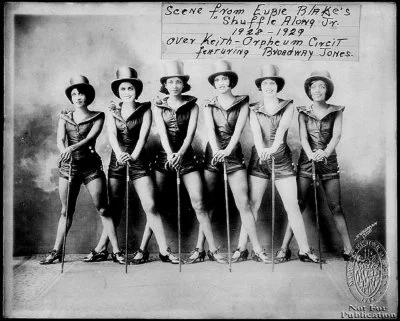
Freddie Washington performing with the Honeysuckle Honey's in Shuffle Along
Hollywood, Passing, and Refusal
In the early 1930s, Hollywood came calling. Fredi’s most famous role—Peola in Imitation of Life (1934)—would define her public image and complicate her career forever. Peola is a light-skinned Black woman who chooses to pass as white in order to escape racism. The performance was heartbreaking, nuanced, and unforgettable. Audiences were shaken. Black viewers saw rebellion against injustice. White viewers often misunderstood it as shame. And many assumed Fredi herself must be passing. She wasn’t.
Despite her blue-gray eyes and pale complexion, Fredi refused to deny her identity. At a time when other actresses hid or rebranded their heritage to survive Hollywood, she said no—again and again.
“You don’t have to be white to be good,” she told reporters.
“I am a Negro and I am proud of it.”
That refusal came at a cost. Hollywood didn’t know where to place her. She was considered too light-skinned to play servants, too Black to be cast romantically opposite white actors, and too principled to accept degrading roles. Within three years of her breakthrough, her film career was effectively over.
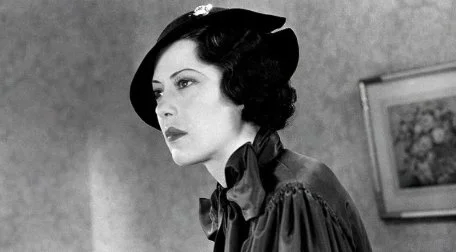
Fredi Washington in Imitation of Life 1934
Turning Art into Activism
If Hollywood closed its doors, Fredi Washington opened others. In 1937, she co-founded the Negro Actors Guild of America alongside Paul Robeson, Noble Sissle, Ethel Waters, and W. C. Handy. The organization fought against stereotyping, unequal pay, and discriminatory working conditions—and Fredi served as its first executive secretary. She also worked closely with the NAACP, advocating for better representation, lobbying for anti-lynching legislation, and using her influence to push studios toward accountability. Her activism wasn’t abstract—it was lived. When touring the segregated South with Duke Ellington’s band, she used her ability to “pass” only to help others—slipping into whites-only ice cream parlors to buy treats for Black musicians who weren’t allowed inside. She would endure slurs and threats rather than abandon her people. Passing, to her, was never liberation.
“To pass, for economic or other reasons,” she said,
“would mean I swallowed the idea of Black inferiority. I refuse.”

Fredi Washington - Wearing an anti-lynching arm armband during her involvement in the anti-lynching movement - mid 1940s.
A Voice Beyond the Stage
Fredi’s advocacy found another home in journalism. From 1942 to 1948, she served as entertainment editor for The People’s Voice, an influential Black newspaper founded by Adam Clayton Powell Jr. (who was married to her sister). She wrote boldly about theater, film, radio, and civil rights—calling out exclusion wherever she saw it. In one piece, she bluntly observed that radio “keeps its doors sealed” to Black artists. Later, she returned to the industry not as a performer, but as a casting consultant for groundbreaking productions like Carmen Jones and Porgy and Bess, helping shape more honest representation from behind the scenes.
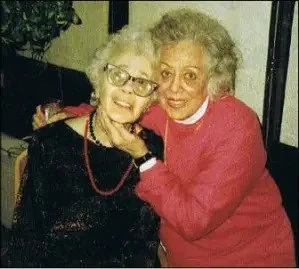
Fredi and sister Isabel in their elderly years - Late 1980s
Legacy of Motion and Meaning
Fredi Washington died in 1994 at the age of 90, but her impact continues to ripple outward. She was inducted into the Black Filmmakers Hall of Fame, received multiple lifetime achievement awards, and is honored in archives, memorials, and historic collections across the country. More importantly, she left behind a blueprint for using art as resistance. She danced when dancing was defiance. She spoke when silence was expected. She chose truth when passing might have made her famous.
In her own words:
“I am an American citizen, and wherever those rights are tampered with,
there is nothing left to do but fight… and I fight.”
Fredi Washington didn’t just move across stages—she moved culture forward.


Written by: Amanda Bernice
Resources:
Women and Mixed Race Representation in Film: Eight Star Profiles - Valerie Gilbert
Oh, Sister! Fredi and Isabel Washington Relive ‘30s Razzmatazz - Norma Jean Darden, Essence Magazine, September 1978
Pass or Not to Pass? - Earl Conrad, The Chicago Defender, June 16, 1945
A Real Negro Girl: Fredi Washington and the New Negro Renaissance - Laurie A. Woodard
The Fredi Washington Papers Collection - The New York Public Library Digital Collections
Obituary: Fredi Washington - Stephen Bourne, The Independent UK, July 4, 1994
Fredi Washington: Black entertainers and the Double V campaign - Kimberly Davis, Texas State University Digital Library
Video Resources:
Preview Clip: Black and Tan (1929, Duke Ellington, Fredi Washington)